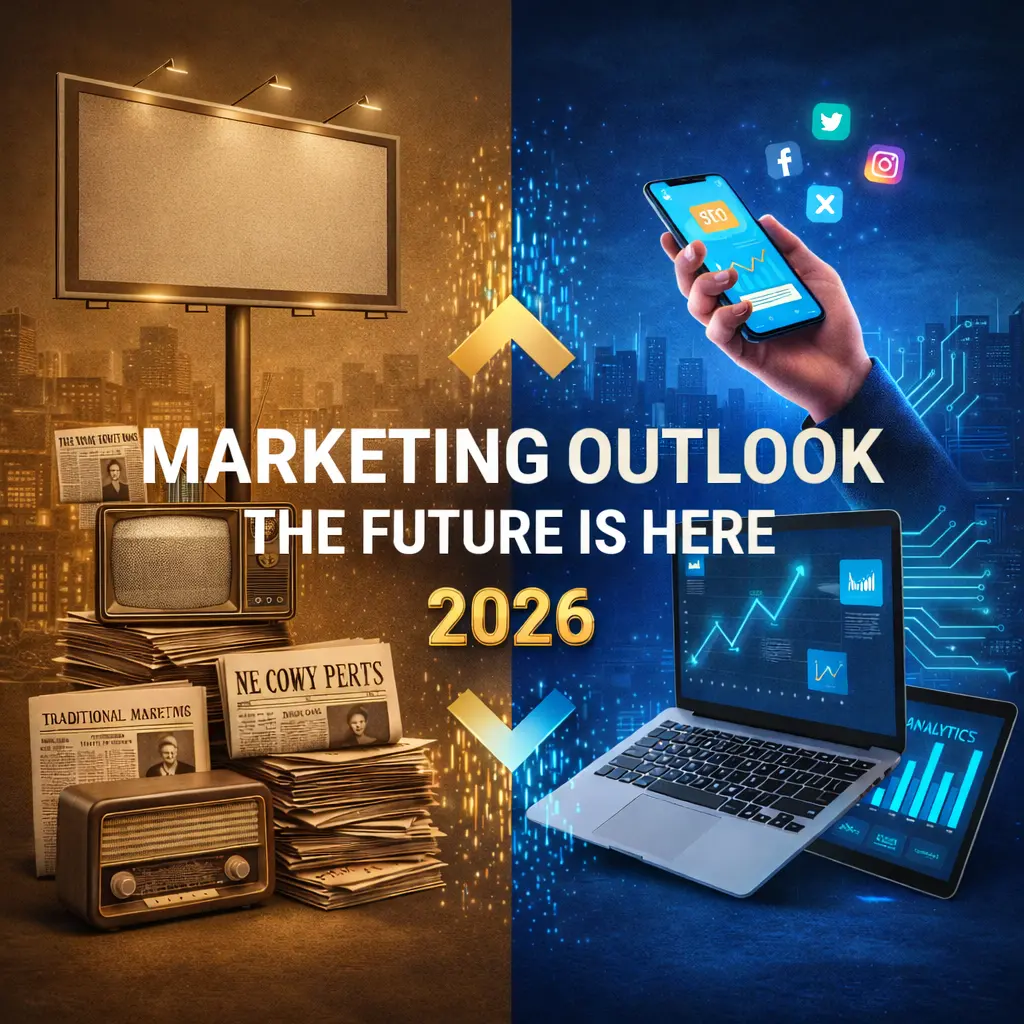
In the year of 2026, the decision between traditional marketing vs digital marketing has the potential to influence the growth of your company. The goal of this article is to inform business owners, entrepreneurs and marketers about what methods to utilize when spending their advertising dollars to yield the most return on investment.
This comparison of traditional marketing vs digital marketing helps businesses decide where to invest for maximum ROI in 2026.
Traditional media such as TV, print and out-of-home have generated results for many years. Digital marketing has provided more sophisticated targeting, measurable results and real-time reporting. Both traditional marketing vs digital marketing have value when used in conjunction with one another.
In this article, we will review the key benefits of each marketing strategy, how to compare pricing and budgeting and finally, we will show you how to use the ability to measure and target your audience with digital marketing so that you reach your target market more accurately.
Table of Contents
What is Traditional Marketing?
In the discussion of traditional marketing vs digital marketing, traditional methods continue to play a role for specific audiences and industries.
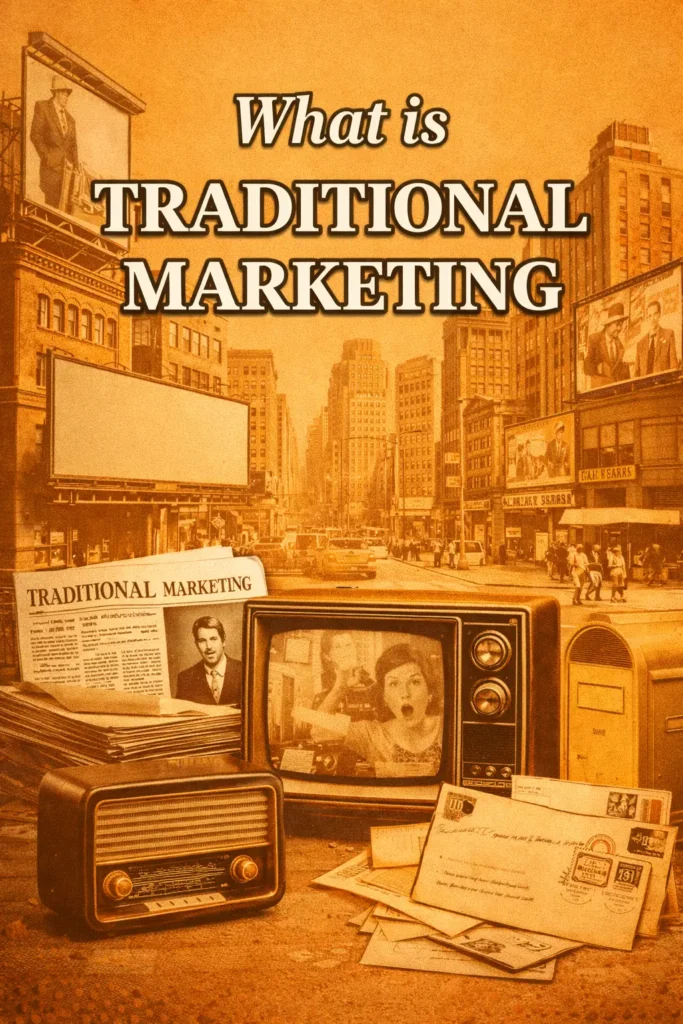
Traditional marketing is the term used to refer to methods of advertising and marketing which do not make use of the internet to promote products or services. The use of traditional marketing encompasses the methods that have existed for many years; however, many of these methods are less common than they were several years ago. There are still valuable benefits associated with using traditional marketing for specific businesses or consumers that will continue to take place.
Examples of traditional marketing methods include:
-Direct mail, postcards, coupons, brochures etc.
-Television and radio ads
-Newspaper and magazine ads
-Outdoor advertising (billboards, posters etc.)
-Telephone calls/text alerts
You hear and see many advertisements like these on a regular basis while driving to work on the radio, or just looking at the billboards you pass as you drive down the road. Over time, these different types of ads have become a common and permanent element of our everyday lives.
What’s Digital Marketing?
When evaluating traditional marketing vs digital marketing, digital strategies stand out for flexibility, analytics, and real-time optimization.
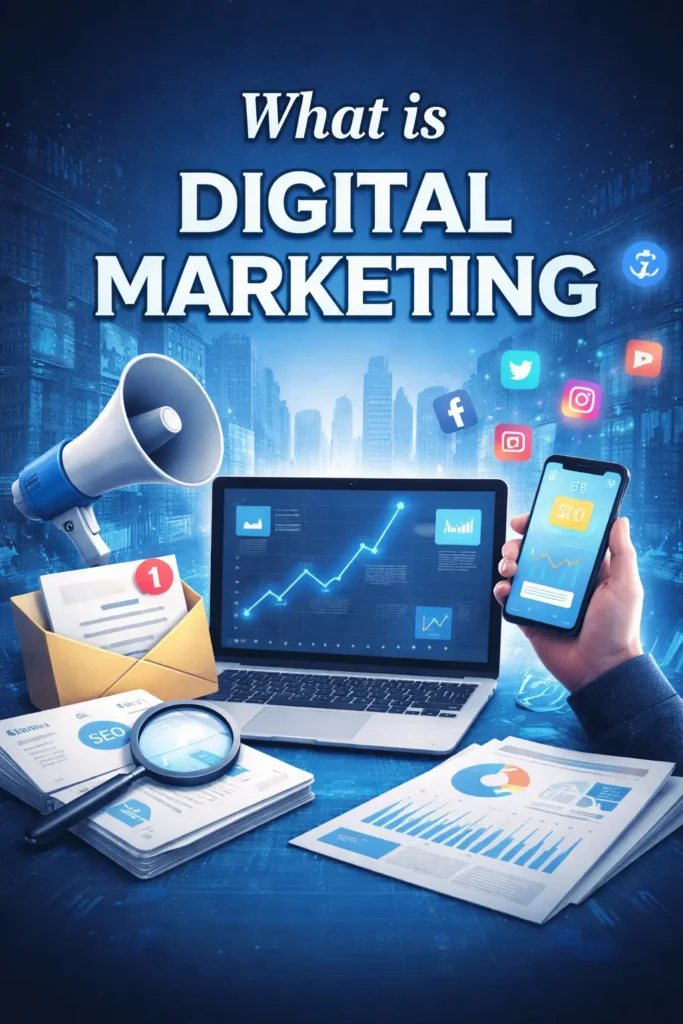
Digital marketing means marketing that is accomplished using the internet and other digital technologies like mobile phones, computers, etc. Furthermore, the methods used in digital marketing are constantly changing based on trends and evolution in technology. Digital marketing is still new compared with traditional advertising but has had an enormous impact and can be very effective in reaching customers.
Digital Marketing includes:
-Search Engine Optimization (SEO)
-Social Media Marketing (SMM)
-Content Marketing
-Affiliate Marketing
-Email Marketing
-Pay per click and clickable ads
Digital marketing has taken off in popularity due to how much traffic and how often people use the internet and mobile devices. There are several billion people using the internet and social media every day. Therefore, advertising through online sources provides a vast amount of exposure and engagement opportunities for companies advertising ways to get in front of their audience.
Differences between Traditional marketing vs Digital marketing
- This section highlights the core differences in traditional marketing vs digital marketing for modern businesses.
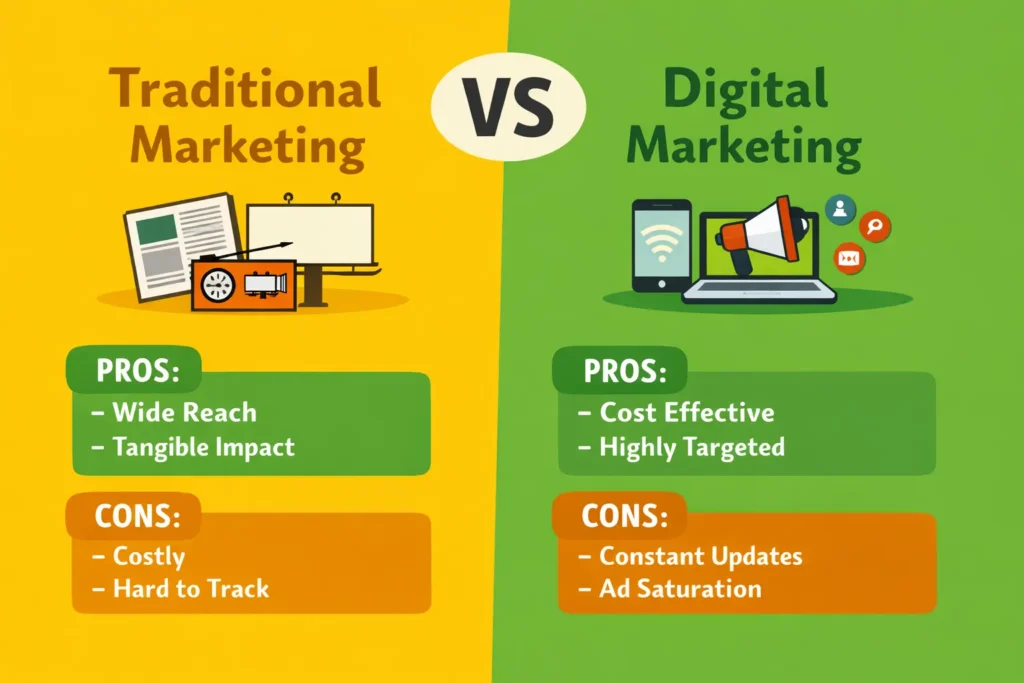
A comparison of both digital and traditional marketing shows how different approaches affect the ability of businesses to connect with their customers.
Traditional Marketing
1. A major difference between Traditional and marketing is that traditional marketing methods are primarily used by business owners to inform customers about products and services without allowing for some “two-way” interaction.
2. The majority of traditional marketing materials are produced in a physical form such as brochures, newspaper advertisements, or billboards; therefore consumers can see and hold onto them.
3. Typically the costs of television commercials, print ads, and billboards are much higher than other forms of advertising, and they generally require a larger investment of money and time.
4. Television and radio advertising can be used to quickly deliver messages to large audiences thus proving effective for enhancing brand recognition and awareness.
Digital Marketing
1. Digital marketing methods such as using social media platforms allow businesses to communicate directly with customers, primarily through comments, direct messages or live interactions.
2. Unlike traditional marketing, the effectiveness of marketing campaigns can easily be determined through the use of analytic tools (such as Google Analytics), and therefore marketers will have the ability to make necessary improvements to future campaigns.
3. Due to their ability to run targeted advertising campaigns with minimal budgets, as well as the high-level return on investment (ROI) associated with digital marketing, digital marketing offers significant advantages over traditional marketing methods.
4. Digital marketers utilize subscription services to acquire specific demographic, psychographic and behavioral-based information about potential customers, ultimately increasing their chances of successfully reaching and appealing to their target audience.
These differences clearly show why traditional marketing vs digital marketing is no longer an either-or decision for growing businesses.
Contrasts Between Traditional Marketing and Digital Marketing
Understanding traditional marketing vs digital marketing helps brands choose the right communication channel.
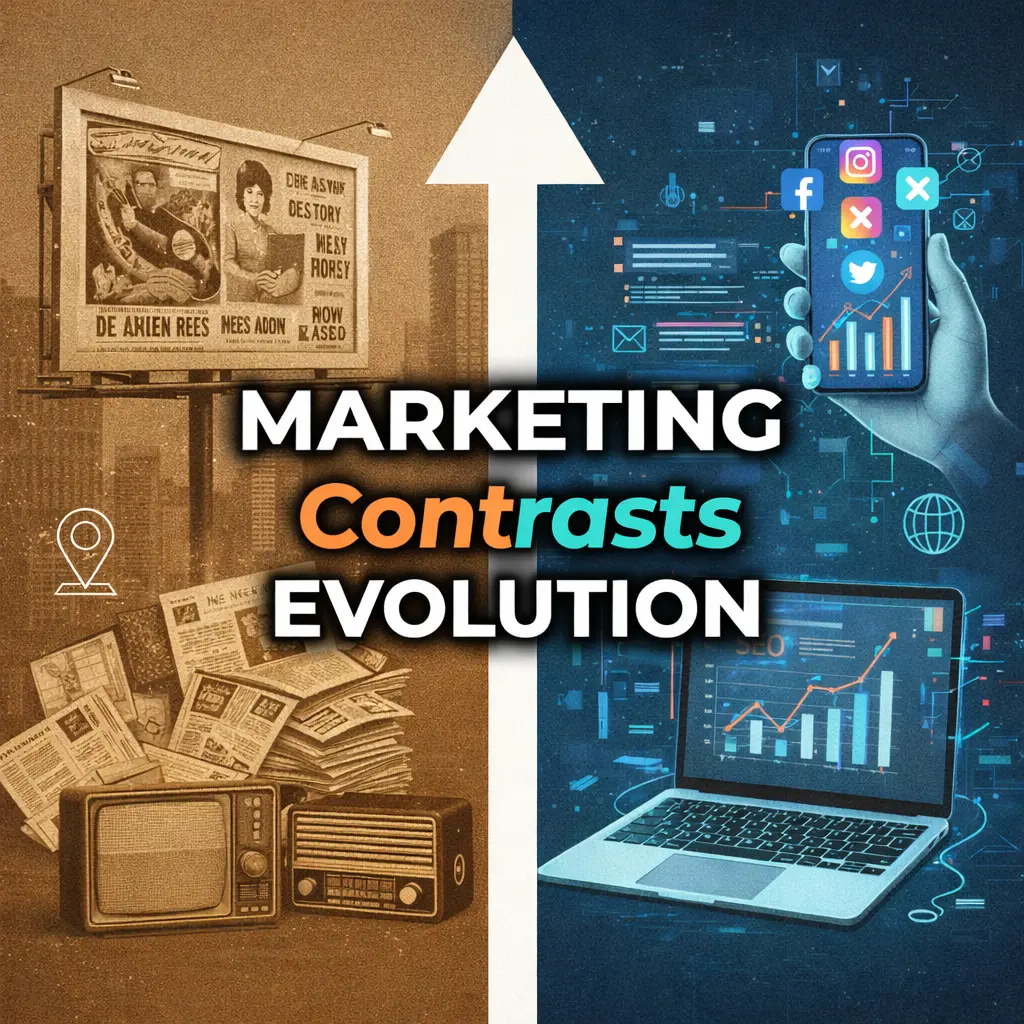
Traditional marketing vs Digital marketing comes down to several defining aspects, including: what kinds of communication are being used (i.e., content type); how the message is sent; the financial components of a marketing campaign; targeting of audiences; personalization tactics; measuring effectiveness of marketing campaigns; and the overall term’s breadth.
To gain a greater understanding of the contrasts between both marketing mediums, let us describe the major distinctions of digital vs. traditional marketing as follows:
1.Mediated Communication
Digital Marketing utilizes a digital channel, such as websites, social media, search engines, Email, or mobile app. Digital Marketing provides businesses with a data-driven, electronic tool for reaching their target audience in the places where most of their time is typically spent on average.
Traditional Marketing utilizes an offline channel, such as television, radio, newspaper, magazine, billboard, or direct mail. Traditional marketing focuses on physically placing advertisements in front of your potential customers in their daily lives.
2.Global Reach and Access
Digital Marketing provides a global reach accessible by anyone with access to the internet; therefore, companies can connect with their customer base around the world through a connection to the internet. Additionally, Digital Marketing allows you to easily adapt your advertising message to the different cultural customs, languages, and even regional differences of your audience members globally through custom-engineered language translations.
Traditional marketing methods are mainly limited in where they can reach people (primarily relying on physical geography) and their intended audience tends to be much smaller than most digital campaigns. Most traditional advertising is based in a region (`e.g.,` local newspapers and regional radio), which means that if you want to reach more people, you will most likely have to spend more money and require a larger amount of resources.
3. Cost Effectiveness
The majority of digital marketing tactics are typically less expensive than their traditional counterparts and give businesses the ability to start with a small initial budget, and gradually scale the campaigns to reflect the results that they are generating. Social media ads can be launched with a very low initial budget and then modified based on the performance of the campaign itself.
In addition, traditional marketing tactics often require more upfront capital. Advertising through television, radio and print can be quite expensive when trying to target the prime time or a large audience. Generally, traditional marketing tactics have a greater level of fixed costs associated and do not vary according to the success of the marketing campaign.
4. Interactivity & Consumer Participation
Business through digital marketing can connect e.g. to its customers, engage them in real-time and interact with them by creating a two-way dialogue through such as:
• Likes,
• Comments,
• Shares,
• Direct messages,
There will be increased levels of interaction which should result in the establishment of a stronger relational connection between the business and its consumers and opportunities for the consumer to provide content for the business.
5. Targeting & Personalisation
Through digital marketing, it is much easier to locate prospective audience members based on reported information (such as): demographics, interests, geographic location and online action taken to generate accurate audience targeted messages which, in turn will ensure the proper messages are received by the correct audience group with whom they were to be sending an engaging message.
For example, a Facebook advertising campaign advertising a fitness product could target potential customers aged 25 to 35, located in a specific city, and who have demonstrated an interest in health and fitness or have recently searched for a fitness club membership. This allows the brand to send specific, relevant content to a specific group of people, leading to higher levels of engagement with this audience and, ultimately, better conversion rates.
Traditional marketing offers limited targeting; therefore, messaging to various audience segments is generally not as practical. This creates additional barriers in the ability for marketers to create unique messages to different audiences through different traditional media.
For example, a television ad showing the same fitness product would be broadcasted to a wide variety of viewers, many of whom have no interest in fitness. The ad could create mass awareness for the product but does not include any personalized messages; thus, it is much less likely to generate targeted engagement or conversions.
6. Variety and Originality of Content
There are a variety of different formats for digital marketing content such as:
-videos
-infographics
-podcasts
-interactive ads
-animations
-augmented reality experiences
The most obvious way digital marketing differs from traditional forms of promotion is through its use of dynamic content. Traditional forms of promotion are almost always limited to only static formats (e.g., print ads, billboards), and if you want creativity, then your options are limited. While television commercials can be interactive, they do not get nearly as much interaction as digital formats outside of TV.
Which Type of Marketing Is Right for You?
Choosing between traditional marketing vs digital marketing depends on audience behavior, budget, and long-term business goals
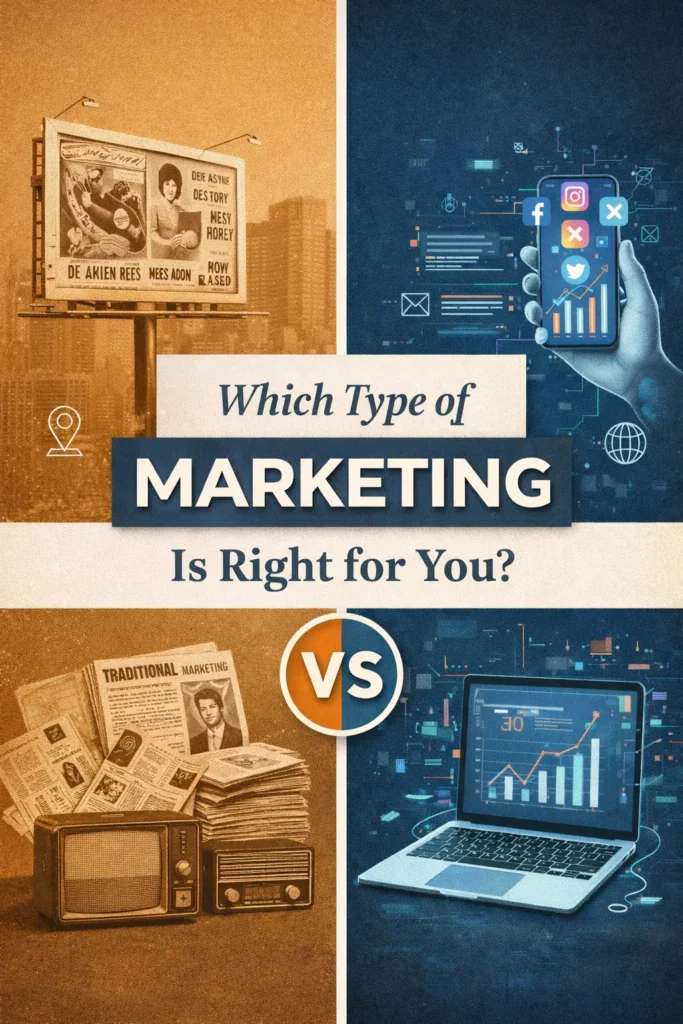
To help determine what type of marketing strategy is right for you; here are a few things you can consider:
1. Your target market
2. Your budget
3. Your overall image (branding, etc., to the general public)
4. Your business goals
5. Your media preferences
When Traditional Marketing Works For You?
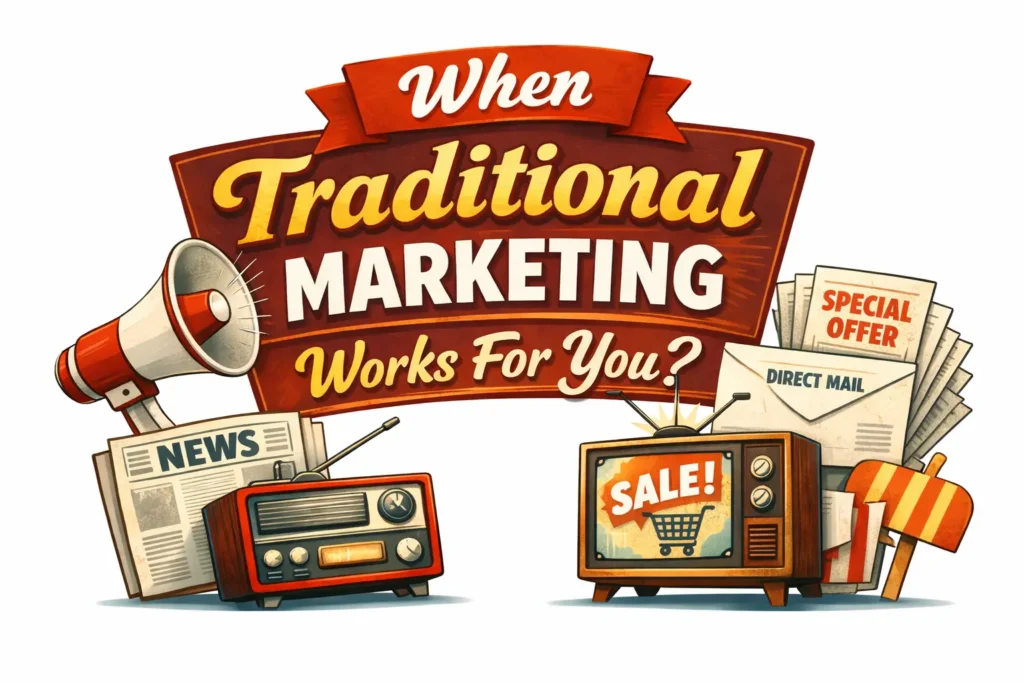
If you can identify your target audience and understand how they tend to consume information, then you will likely be able to identify which form of marketing will provide you with the best return on your investment. Traditional forms of marketing work best for an audience that has a larger portion of the population over 55 years of age. If your target market values the experience of seeing your business from a distance (for example, on a billboard), then investing in traditional methods of advertising may be worth your while, especially if your company is focused on targeting individuals within the same immediate vicinity as your location.
You may also find that if you have a large advertising budget to invest in TV commercials and billboards; then you will gain more significant returns by utilizing these advertising mediums, than by using digital formats.
Why is Digital Marketing a Great Option?
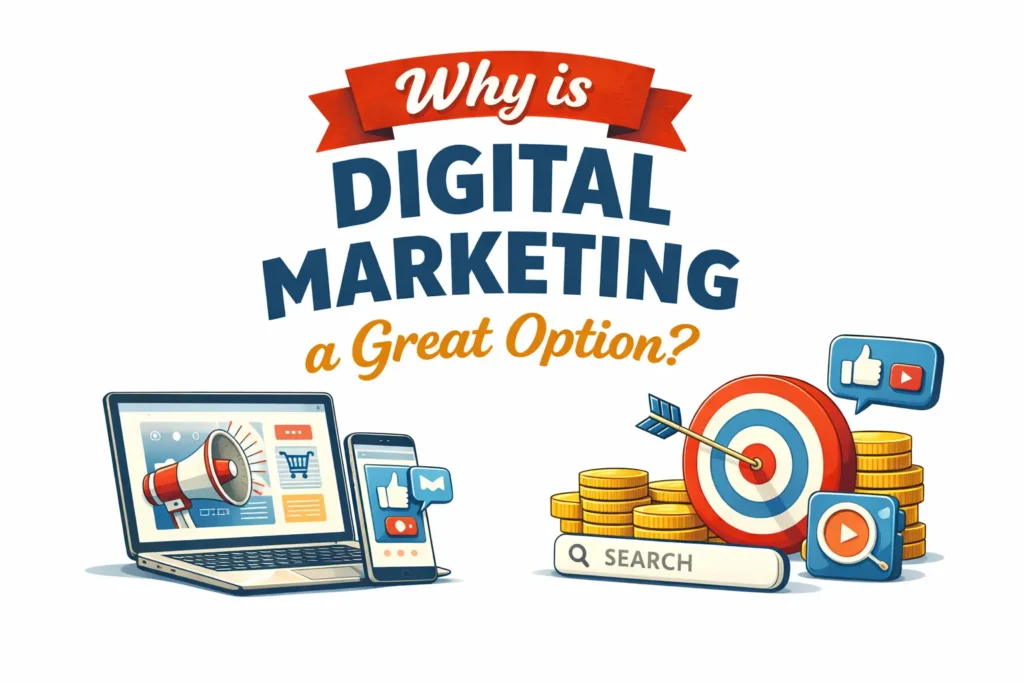
Digital marketing is most effective when you are trying to get the attention of a much larger or a global audience. It has many low-cost ways to do this along with measurable performance metrics which makes it easy to track how well your campaign performs and to make adjustments as needed to improve it. Businesses that use a dependent amount of their revenue through websites, e-commerce and/or search engine optimization benefit the most from this type of marketing.
Conclusion
The debate around Traditional Marketing vs. Digital Marketing is not about which one is better, but about identifying what best aligns with your business objectives. While traditional marketing builds trust and strong brand recognition, digital marketing provides flexibility, affordability, and global reach.
Ready to elevate your marketing strategy? Get in touch with InterSellerMart today for expert digital marketing solutions.
To read more about digital marketing blogs you can check OneHighSky and MarketFuels